In the Field
My fieldwork in Ethiopia gave me the opportunity to learn directly from people, communities, and agricultural environments beyond what I can observe in survey data. This page shares some of the people, landscapes, crops, and everyday experiences that shaped my understanding of the country.
Fieldwork and Local Communities
During my fieldwork in rural Sidama Region and South Ethiopia Region, I traveled to local kebeles to better understand the conditions behind the patterns I observed in household survey data. I spoke with rural households, local officials, and researchers to learn from their experiences and perspectives on local economic conditions, agricultural production, and changing climate conditions. Being in the field allowed me to observe the environments in which households make decisions and better understand the opportunities and constraints that are difficult to capture through quantitative data alone.
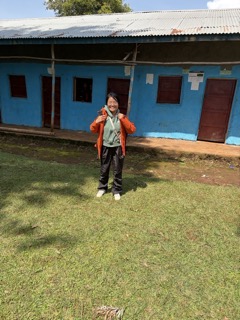
Visiting a local community during fieldwork in the South Ethiopian Region.
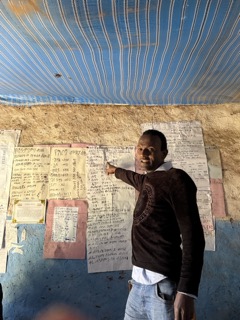
Learning about local records and community conditions.
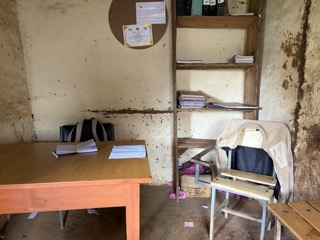
One of the kebele offices where I conducted fieldwork.
Agriculture and Climate
Agriculture is central to rural livelihoods in Ethiopia. During my fieldwork, I encountered a diverse range of crops, including maize, enset (false banana), coffee, teff, wheat, cabbage, and sugarcane. This year (2026) has been particularly difficult for most of the farmers I met. Farmers described rainfall arriving at the wrong time, disrupting planting, crop growth, and harvesting. In some communities I visited, farmers reported losing much or all of their maize harvest, while enset, an important crop in southern Ethiopia, was also affected by disease.
What struck me, however, was how farmers responded to the shocks. Despite these setbacks, they continued to work hard on their land, adapting their production and planting crops such as potatoes, teff, and beans after losses earlier in the season. Their persistence in the face of difficult growing conditions was particularly striking. At the same time, adaptation extended beyond the farm: some households sent family members to nearby towns for seasonal work, sold livestock to cope with income losses, or started small agriculture-related businesses to diversify their livelihoods. Seeing these responses firsthand gave me a deeper understanding of how climate shocks shape not only agricultural production, but also household labor allocation, livelihoods, and broader economic decisions.
Main Crops
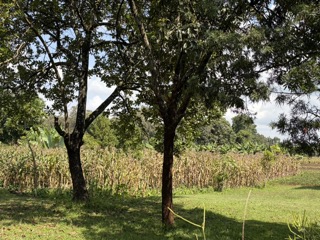
Maize was particularly affected by this year’s poorly timed rainfall. When farmers realized that their maize would produce little or no harvest, many shifted to other crops, such as beans and potatoes.
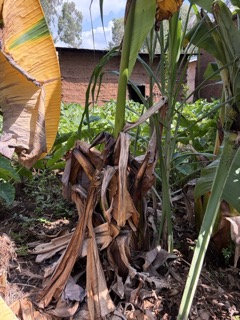
Enset (false banana), an important staple crop in the South Ethiopia Region, has been affected by disease. Local farmers reported that the disease may spread through contaminated knives used to cut enset plants. To prevent further spread, farmers remove affected plants and bury them away from the field.
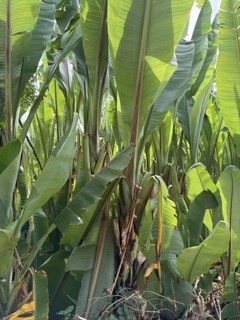
For comparison, a healthy enset plant is green and vigorous, with strong, upright leaves. As the plant matures, the outer leaves naturally turn yellow. In contrast, a diseased enset plant can show yellowing in the inner leaves first.
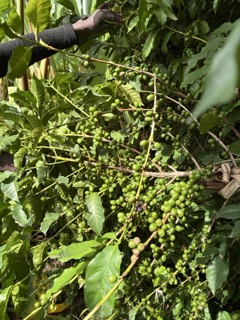
Coffee is one of Ethiopia’s most important cash crops, particularly in Sidama, a region well known for its coffee. This year, some coffee farmers I spoke with in the South Ethiopia Region also reported crop disease. Affected farmers had to cut down diseased coffee trees and obtain new seedlings from other regions.
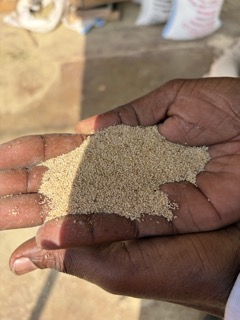
Teff is a major Ethiopian cereal crop and the primary grain used to make injera, a traditional Ethiopian staple food. After harvest, the remaining teff straw is used for animal feed and as a building material for traditional houses.
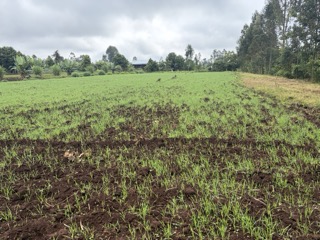
Wheat cultivation.
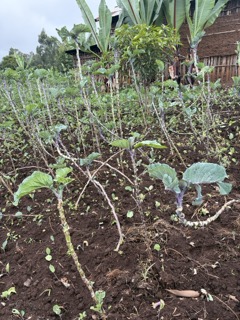
Local cabbage, which is similar to kale, is widely used in traditional Ethiopian dishes. On this plot, farmers grow both local cabbage and the type of cabbage commonly eaten in the United States. The small seedlings are the latter variety.
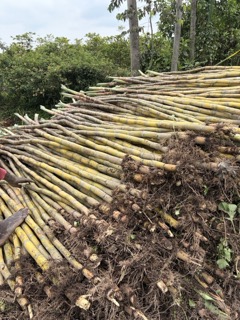
A group of farmers harvesting sugarcane invited us to taste some freshly cut cane, which was remarkably juicy and sweet.
Food and Culture
Fieldwork also gave me the opportunity to experience Ethiopia through its food and everyday traditions. Many of the foods I encountered were closely connected to the crops and livelihoods I was learning about in the field, from coffee and teff to enset and other locally grown crops. Sharing meals and coffee with local colleagues and friends was also an important part of getting to know the communities where I worked.

Ethiopian coffee.

Injera served with fish.
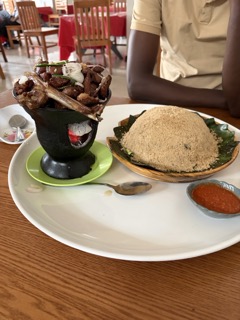
Chukame (traditional food) made from enset, which is my favorite.
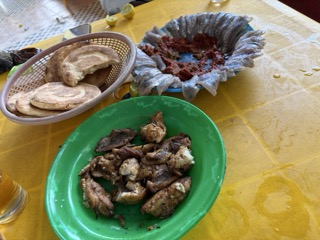
Fish from Lake Hawassa.